
Under the Palaszczuk Government‘s Invested in Queensland program, new technology will breathe fresh life into what was once the world’s largest gold mine, creating over 130 new direct jobs.
Treasurer and Minister for Trade and Investment Cameron Dick said the Heritage Minerals-led project to revitalise the Mount Morgan gold mine would give financial and environmental advantages to the local community.
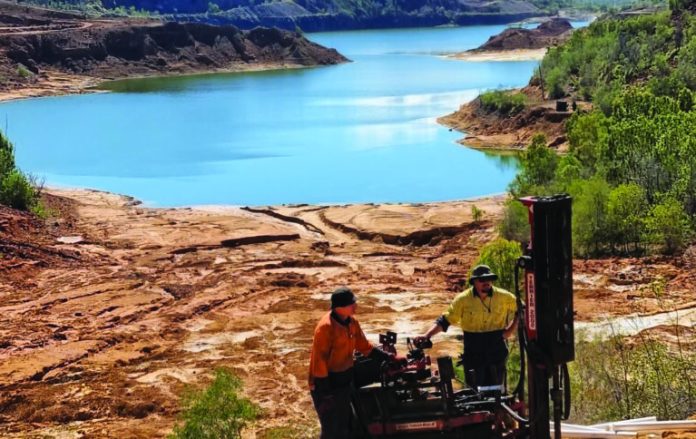
“From its proud history as the world’s largest gold mine in the early 1900s, Mount Morgan has been under State Government management to remediate legacy environmental and safety risks for nearly 30 years,” Treasurer Dick stated.
According to the Treasurer, Heritage Minerals‘ proposal to build a tailings processing plant on the site is a game changer, with the ability to process approximately 10 million tonnes of existing gold ore tailings and recover approximately 263,000 ounces of gold and 5,600 tonnes of copper.
“The project would create up to 133 full-time local jobs by re-commercialising the remaining resources and is expected to generate almost $40 million in new mining royalties to the State over its first seven years of operation,” the Treasurer added.
Resources Minister Scott Stewart said this was an example of how the resources sector still supports good jobs in the regions.
“This was a key action identified in our Queensland Resources Industry Development Plan, and it’s great to see Heritage Minerals take advantage of the opportunity a legacy operation like this is presenting,” Minister Stewart stated.
According to the Treasurer, the initiative will significantly reduce the State Government’s environmental site maintenance expenditures.
“This project will also create significant savings in site management and remediation costs to the State. Heritage Minerals’ plans include the construction of a new water treatment plant to lower the level of contamination in the open cut pit, treat all water captured by the site’s seepage interception system, and help meet regulatory requirements for the release of treated water into the Dee River,” the Treasurer said.
He added that with new technology, the procedure might cut cyanide usage by half, purifying the mine’s tailings stream and enhancing clean water discharge.
“While the Queensland Government’s support for Heritage Minerals’ proposal through our Investment in Queensland program is subject to the project also receiving Commonwealth Government and private sector financial support, our backing is a key step forward,” the Treasurer said.
Member for Rockhampton Barry O’Rourke stated that the initial seven-year plan might only be the beginning of Mount Morgan’s revitalisation.
“Heritage Minerals currently holds mining leases and State environmental approvals over the site, demonstrating their commitment to proceeding with this project. Given the amount of gold and copper remaining on site, there is potential for the tailings processing plant to continue operation for decades to come,” O’Rourke added.
Member for Keppel Brittany Lauga said the possibility of new mining jobs in Central Queensland boosted the region’s resource credentials.
According to Heritage Minerals Managing Director Malcolm Paterson, the investment from the Queensland Government would enable preliminary work on the environmental restoration of the old mine site to extract gold and copper from mine tailings to begin, resulting in a project that might support jobs for another 100 years.
“The Mount Morgan mine created so much wealth and prosperity and had wide-ranging impacts, including providing the impetus for the establishment of BP (British Petroleum) as well as the Walter and Eliza Hall Institute, Australia’s oldest medical research institute,” Paterson said.
Paterson stated that approximately 250 tonnes of gold and 360,000 tonnes of copper were recovered from the mine during its lifetime, with approximately 134 million tonnes of waste rock and tailings produced.
He added that the project would respect and safeguard Mount Morgan’s great history while also creating new jobs and possibilities for the region’s future. According to Paterson, Heritage Minerals commissioned a multi-year documentary about Mount Morgan and the restart of the mine as part of the company’s dedication to the site’s history and its significant role in Australia’s history.
“Given the mine’s storied Queensland history, metals mined from Mount Morgan would also be ideal for production of the 2032 Olympic and Paralympic Games gold, silver and bronze medals,” stated.
According to Paterson, Heritage Minerals has been collaborating closely on local job creation and procurement with the Rockhampton Regional Council, the Australian Government‘s Northern Australia Infrastructure Facility, and the Queensland Government, which has been managing the site as an abandoned mine through the Department of Resources.
“All our key permits and approvals, including our environmental authority, are now in place. Once we finalise funding and finance approvals with the Australian Government, which we expect within coming weeks, we can commission further preliminary works. These works include an access road, administration buildings and a drain to divert freshwater captured on the site to a freshwater water storage as a new way to lessen acid mine drainage that emanates from the site,” Paterson said.
He added that planning is also being done for the personnel and rostering requirements as the project progresses.