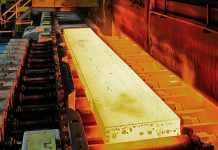

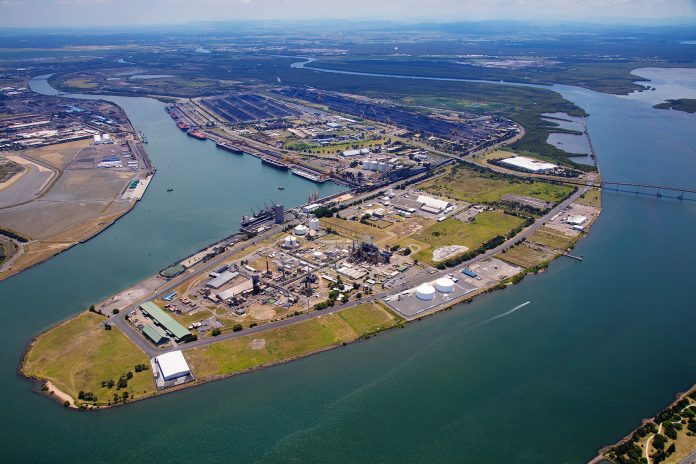
Orica has successfully commissioned the new tertiary abatement technology at its three nitric acid plants as part of the Kooragang Island Decarbonisation Project in Newcastle.
The fully operational tertiary abatement technology, a crucial step in Orica’s effort to decarbonise its operations, has reduced the greenhouse gas (GHG) emissions emitted by Orica’s three nitric acid facilities by at least 98%.
This equates to 48% of the site’s total GHG emissions and 11% of all chemical industry process emissions in Australia. This initiative will continue to remove 567,000 tonnes of CO2 equivalent from the site each year, comparable to the emissions from 50,000 Australian households.
The project was made possible through a joint investment of $13.06 million from the NSW Government‘s Net Zero Industry and Innovation Program and $25 million from Orica, funded by the Australian Government‘s Clean Energy Finance Corporation. The Clean Energy Regulator also approved the project qualified to produce Australian Carbon Credit Units.
Orica Managing Director and Chief Executive Officer Sanjeev Gandhi said the project demonstrates the feasibility of reducing emissions in hard-to-abate industries with the right policy settings and corporate commitments.
“The policy certainty from the passage of the Government’s Safeguard reforms means we can now continue to accelerate our decarbonisation plans with confidence. We will continue to invest across our operations, to ensure Australian manufactured products remain competitive as the world transitions to a lower carbon economy. Our focus now moves to decarbonising our operations at Yarwun in Queensland utilising the same proven technology,” Gandhi stated.
According to Minister for Climate Change and Energy Chris Bowen, the initiative is the type of innovation the Federal Government’s safeguard reforms incentivise, assisting industrial emitters in reducing emissions while maintaining their competitiveness.
“We congratulate Orica investing in technology that helps protect job security for the over 250 employees at the Kooragang Island facility – ensuring they remain competitive in a decarbonising global economy,” Minister Bowen added.
Additionally, Orica announced that it would collaborate with Origin Energy on the Hunter Valley Hydrogen Hub to deliver a commercial-scale renewable hydrogen supply chain in the Newcastle industrial and port zone. The first phase of the project will produce renewable hydrogen from recycled water and renewable electricity using a grid-connected 55MW electrolyser.
The hydrogen produced at the plant will be routed to Orica’s manufacturing site and used to replace natural gas in the production of green ammonia and ammonium nitrate, which are crucial products for many businesses in NSW, including the mining, agriculture, health, and food industries.
Memorandum of Understanding (MoU) agreements have also been signed with Orica, Origin Energy, and the Port of Newcastle to possibly scale up production in succeeding phases of the Hunter Valley Hydrogen Hub development in the Clean Energy Precinct.
In addition to increasing production, prospects for ammonia storage and a potential domestic and international terminal on the Clean Energy Precinct are being explored by the Port of Newcastle and Orica.
“We’re deeply committed to future-proofing our manufacturing, jobs and economies, maintaining supply chain sovereignty and building a solid foundation for a regional Hydrogen Hub in the Hunter Valley, while also supporting our customers to achieve their sustainability goals,” Gandhi said.
“However, these projects will take time and significant challenges exist. Collaboration with Government, community, industry, academia and commercial partners will be critical to the success of this project. We believe this will give Australia the best chance at establishing a robust domestic renewable hydrogen and ammonia industry with export and global scale while thriving in a lower carbon world,” Gandhi added.