
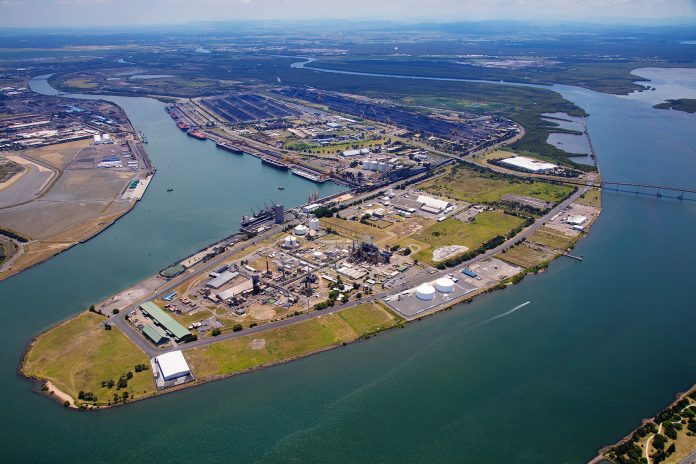
Orica has successfully reduced 250,000 tonnes of greenhouse gas emissions from its Kooragang Island manufacturing facility using Australia’s first tertiary catalyst abatement technology deployment.
The Kooragang Island facility in NSW has installed three tertiary abatement reactors, resulting in a 20% reduction in total greenhouse gas emissions between November 2022 and August 2023. This means that for every tonne of nitric acid produced, over 95% of nitrous oxide emissions have been reduced compared to 2019 levels, benefiting various businesses in NSW.
The project was made possible by a joint investment of $13.06 million from the NSW Government‘s Net Zero Industry and Innovation Program and $25 million from Orica, funded by the Australian Government‘s Clean Energy Finance Corporation (CEFC). The Clean Energy Regulator also approved the project qualified to produce Australian Carbon Credit Units.
When Orica announced the commissioning of the first tertiary abatement technology, Federal Minister for Climate Change and Energy Chris Bowen said, “This is exactly the type of innovation that our safeguard reforms incentivise, helping industrial emitters reduce their emissions while staying competitive.”
Orica Group Executive and President Australia Pacific Germán Morales stated that the milestone is critical in Orica’s decarbonisation journey and goal to achieve net zero emissions by 2050.
“We are accelerating action to reduce greenhouse gas emissions today, ensuring a sustainable future for our manufacturing facilities and supporting customers in achieving their sustainability goals. We are already seeing the benefit of this technology at our Kooragang Island facility, with an annual estimated reduction of 500,000 tonnes of carbon dioxide equivalent. Now, as we continue our decarbonisation efforts, we will focus on installing the same proven technology at our Yarwun facility,” Morales said.
Orica anticipates a total reduction of at least 19% from baseline levels at the end of FY2023, through investments made responsibly to significantly reduce net operational Scope 1 and 2 greenhouse gas emissions across some of its key manufacturing plants. This aligns with Orica’s accelerated climate objective, which calls for a minimum 45% reduction in net operating Scope 1 and 2 emissions from 2019 levels by 2030.
Orica’s Kooragang Island manufacturing facility, one of NSW’s largest industrial gas users, plans to reduce emissions by using renewable hydrogen as a feedstock instead of natural gas. The company aims to produce low-carbon ammonia for export and free up domestic gas supply for Australian households while also reducing Scope 1 emissions.
Meanwhile, Orica is partnering with Origin Energy to establish a commercial-scale renewable hydrogen supply chain in the Newcastle industrial and port zone. The Hydrogen Hub will be situated next to Orica’s Kooragang Island manufacturing site, leveraging its strategic location on the Port of Newcastle and established end market. It is the only ammonia plant on Australia’s east coast with direct access to a deep-water port and the Port of Newcastle’s Clean Energy Precinct.
The Australian Government has previously announced a $70 million investment for the establishment of the Hunter Valley Hydrogen Hub, which aims to create jobs and boost Australia’s renewable hydrogen industry.
“This project is the next step towards using locally produced renewable hydrogen in Australia to reduce our industrial emissions and develop a renewable export future,” Minister Bowen said.
According to Origin CEO Frank Calabria, strong collaboration between industry, governments, and communities will be a crucial component to the success of Australia’s delivery of hydrogen on a large scale.
“Working in collaboration with Orica, we have continued to build expertise in different aspects of the hydrogen value chain needed to support successful development of the Hunter Valley Hydrogen Hub. We believe hydrogen has the potential to be a new industry for Australia that could contribute to a cleaner future for manufacturing, transport, and heavy industry,” Calabria added.
Today, NSW Minister for Climate Change and Energy Penny Sharpe has announced an additional $45 million in funding from the NSW Government’s Hydrogen Hubs Initiative to advance the Hunter Valley Hydrogen Hub.
Orica and Origin have signed a joint development agreement to advance plans for a Hub, co-fund it through FEED, and continue community engagement through the public EIS exhibition process.
“We are deeply committed to continuing support for our customers by future-proofing our regional manufacturing, jobs and economies. As we progress plans to develop the Hunter Valley Hydrogen Hub, by leveraging our unique location, existing operations, experience and end markets, we will not only address some of our most material greenhouse gas emissions but also create future markets for Orica while supporting our customers as the world transitions,” Morales said.