
Rio Tinto has released its production results for the third quarter, reporting progress and maintained momentum across its operations.
“We delivered another quarter of progress and maintained momentum at our Pilbara iron ore operations. We continued to make good headway ramping up our Oyu Tolgoi high-grade underground copper mine, our Kitimat aluminium smelter returned to full production, and we safely restarted the smelter and refinery at Kennecott after completing the largest rebuild in its history. We have more to do as we work towards sustainable performance improvements across our business,” Rio Tinto Chief Executive Jakob Stausholm said.
Pilbara operations produced 83.5 million tonnes in Q3, 1% lower than 2022 and 83.9 million tonnes in shipment, an increase of 1% from the corresponding period of 2022. Meanwhile, full-year shipments are expected to fall within the original 320-335 million tonne range.
The company reported that bauxite production was at 13.9 million tonnes, an increase of 2% from Q3 2022 due to stabilisation of operations, especially at Weipa, where equipment reliability and performance improved.
Meanwhile, Rio Tinto reported a 9% increase in aluminium production in Q3, with 0.8 million tonnes produced, largely due to full capacity recovery at Kitimat and Boyne smelters, and stable performance at all other smelters.
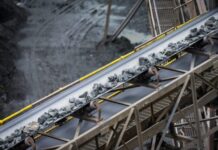
The company’s mined copper production increased by 5% compared to Q3 2022 due to the ramp-up of the high-grade underground mine at Oyu Tolgoi and higher copper feed grades at Escondida. However, lower production at Kennecott was partially offset by the concentrator returning to full capacity after a conveyor failure in March 2023.
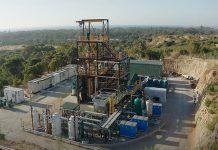
Rio Tinto recorded 34 thousand tonnes in Kennecott’s refined copper production, 37% lower in Q3 2022 due to a $300 million rebuild of the smelter and refinery. The rebuild, which included 300 engineering and maintenance projects and a workforce of 3,200, restarted the refinery and smelter safely. Production is expected to increase in Q4, including rebuilding the flash converting furnace.
According to the company, titanium dioxide slag production decreased by 20% in Q3 2022 due to safety incidents in June and July, affecting two furnaces at Rio Tinto Iron and Titanium (RTIT) Quebec Operations, which are currently under investigation.
IOC production fell 14% in Q3 2022 due to extended plant downtime, conveyor belt failures, and wildfires in Northern Quebec. The full-year production guidance has been reduced to 9.3 to 9.8 million tonnes, from 10.0 to 11.0 million tonnes.
“We took real steps to build our portfolio of materials needed for the future, signing agreements that will see us take a leading position in recycled aluminium in North America and agreeing to enter a joint venture with Codelco to explore for copper in Chile. We also completed further infrastructure agreements with our partners for the world class Simandou iron ore project,” Stausholm stated.
On 21 July, Rio Tinto partnered with Giampaolo Group to form a joint venture to manufacture and market recycled aluminium products. Rio Tinto will acquire a 50% equity stake in Matalco, Giampaolo Group’s wholly-owned business, for $700 million. Matalco operates six facilities in the US and one in Canada, producing around 900,000 tonnes of recycled aluminium annually. Regulatory approvals for the transaction are progressing, with completion expected by the end of 2023.
On 1 August, Rio Tinto has agreed to acquire PanAmerican Silver’s stake in Agua de la Falda S.A., a Chilean company with exploration tenements in the Atacama region, and to establish a joint venture with Corporación Nacional del Cobre de Chile (Codelco) to explore and develop Agua de la Falda’s assets.
Rio Tinto also signed a multi-year supply agreement for high-grade direct reduction iron ore pellets from IOC’s operations with H2 Green Steel on 9 August.
Furthermore, on 11 August, Simfer signed key agreements with the Republic of Guinea and Winning Consortium Simandou (WCS) on trans-Guinean infrastructure for the Simandou project. The Co-Development Convention establishes a legal framework for the co-development of over 600 kilometres of new multi-use rail and port facilities. Simfer and WCS also signed an investment agreement to construct the Trans-Guinean railway and port infrastructure. However, investments remain subject finalisation and approval of feasibility studies, capital funding requirements, and regulatory approvals.
“We are making strong progress towards building the Rio Tinto of the future, striking a balance between disciplined performance in evolving market conditions, investing to generate valuable long-term growth and delivering attractive shareholder returns,” Stausholm said.
Additionally, Rio Tinto has announced the deployment of its Safe Production System, which aims to improve safety, enhance employee engagement, and enhance operational performance, at two additional sites in the third quarter, bringing the total to 22. The company noted that site deployments are progressing according to plan, with an expected number of four to eight new sites in 2023.