

Rio Tinto has entered into an agreement with Platina Resources Limited to acquire the Platina Scandium Project, a high-grade scandium deposit in NSW, for $14 million.
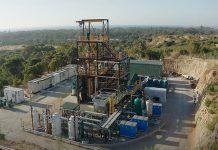
The Platina Scandium Project, located near Condobolin in central NSW, consists of a long-life, high-grade, scalable resource capable of producing up to 40 tonnes of scandium oxide per year for a period of 30 years.
Rio Tinto currently produces scandium oxide at Sorel-Tracy, Quebec, using titanium dioxide manufacturing waste streams. Once the Platina Scandium Project is operational, Rio Tinto will be able to more than double its yearly output of scandium production.
The acquisition is consistent with Rio Tinto’s aim of expanding into commodities critical to the low-carbon transition.
According to Rio Tinto, scandium is a valuable mineral that is scarce, flexible, and important in the green economy and energy transition. The United States, Canada, Australia, and many other countries see it as an important mineral.
Rio Tinto added that scandium is one of the most effective elements for strengthening aluminium while also improving flexibility and heat and corrosion resistance. As a result, it is used to make high-performance aluminium alloys for applications requiring lightness, strength, and heat resistance, such as aerospace, automotive, heat exchangers, sports goods, 3D printing, and energy transition.
Scandium oxide is also used to increase the performance of solid oxide fuel cells, which are employed as a green power source in buildings, medical facilities, and data centres, as well as in specialised goods like lasers and lights.
Rio Tinto Chief Executive Sinead Kaufman stated that the acquisition supports the company’s commitment to critical minerals and finding better methods to provide materials the world needs.
“It will enable us to further develop and grow with the global scandium market, complementing our existing scandium production in Quebec, where we have the expertise, technology, and capacity to produce pure, highly reliable scandium through sustainable methods,” Kaufman said.