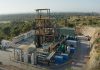


As the operator of the Pikka Unit joint venture, Santos has announced that a final investment decision (FID) has been made to proceed with the US$2.6 billion gross (US$1.3 billion Santos-share) Pikka Phase 1 oil project located on the North Slope of Alaska.
Pikka Phase 1 is projected to produce 80,000 barrels of oil gross per day, with the first oil anticipated in 2026.
In a statement, Santos said that the project has solid fundamentals, is located in a region known for its oil production with significant existing infrastructure, has low unabated emissions intensity, and is supported by essential stakeholders, including the North Slope Borough, the landowner company Kuukpik Corporation, and the Arctic Slope Regional Corporation (ASRC).
Santos Managing Director and Chief Executive Officer Kevin Gallagher stated that Pikka Phase 1 is the right project at the right time and location.
Taking FID on Pikka Phase 1 supports Santos’ ambition of reaching net-zero by 2040. Santos is committed to delivering a net-zero project and has signed into Memorandums of Understanding with Alaska Native Corporations to deliver carbon offset projects, such as a Strategic Alliance with ASRC Energy Services on leading technology development for carbon solutions in the Arctic.
“Santos has emission reduction plans to achieve scope 1 and 2 net-zero emissions by 2040 and in line with that commitment, Pikka will be a net-zero project,” Gallagher said.
According to Santos, Pikka Phase 1 is one of the region’s lowest-cost and lowest unabated emissions intensity new oil projects.
Santos is focused on local procurement and local employment as part of the project, with 98 per cent of current employees residing in Alaska. The project’s first phase is estimated to provide more than 500 jobs, while the project’s development will generate around 2,600 employment.
“Pikka Phase 1 will execute a responsible development plan with a small surface footprint and utilise existing infrastructure, including the Kuparuk transportation pipeline and the Trans-Alaska pipeline system,” Gallagher said.
According to Santos, the company has a 51 per cent interest in the Pikka Unit while Repsol holds the remaining interest.