
Santos, through its energy transition business Santos Energy Solutions, has signed an agreement with Osaka Gas Australia (OGA) for Pre-Front End Engineering and Design (Pre-FEED) work on a demonstration-scale project to produce carbon neutral e-methane from green hydrogen.
Pre-FEED involves infrastructure studies for renewable energy and carbon capture, site selection for green hydrogen and e-methane facilities, process optimisation for e-methane production, and a more in-depth analysis of costs, schedules, feasibility, and risks.
Santos Managing Director and CEO Kevin Gallagher stated that the company has a long-standing, strong partnership with OGA and that Santos is committed to meeting its net-zero by 2040 target.
“I believe it is increasingly clear gas will play a leading role in the transition to a decarbonised future, and Santos is excited to be progressing a new business opportunity that seeks to leverage our assets and capabilities to deliver a cleaner energy that will help create a better world for everyone,” Gallagher said.
According to Gallagher, natural gas decarbonisation promotes a long-term supply of reliable and economical energy and the creation of cleaner fuels such as e-methane. He explained that e-methane solves the constraints associated with hydrogen transport and export by permitting the use of existing transport, liquefaction, and end-user infrastructure, resulting in a scope 1 and 2 carbon neutral conclusion and a scope 3 carbon neutral outcome.
The demonstration project seeks to produce e-methane from green hydrogen generated by water electrolysis powered by renewable energy and CO2 captured at industrial sites or via Direct Air Capture technology rather than discharged into the atmosphere.
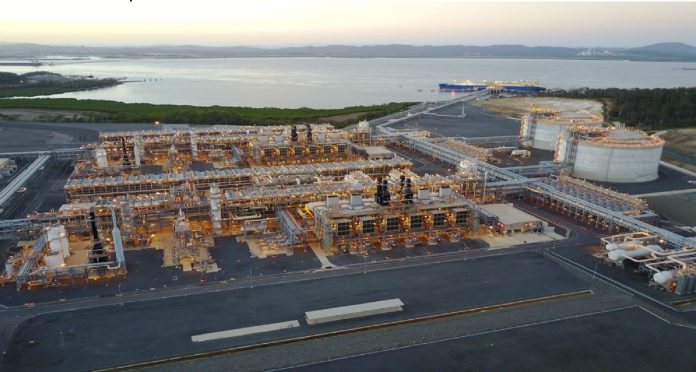
Santos is looking into the possibility of using its existing extensive infrastructure to create, liquefy, and export e-methane to Japan.
Santos and OGA intend to begin FEED in 2024 and have a Final Investment Decision ready in 2026 to generate e-methane at a plant with a targeted capacity of 10 TJ/day and export about 60,000 tonnes of e-methane annually by 2030.