

Santos has signed a carbon capture and storage (CCS) collaboration agreement with Japanese energy companies JX Nippon Oil & Gas Exploration Corporation and ENEOS Corporation.
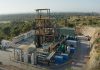
The Memorandum of Understanding (MOU) has accelerated Santos’ plans to expand the Moomba CCS project and transform the Cooper Basin into a hub for decarbonisation and low-carbon fuels.
The partnership will facilitate a joint feasibility study to assess Japan’s potential for capturing, transporting, and sequestering emissions, thereby bolstering the Moomba CCS project’s expansion.
Moomba’s carbon management would support Santos’ Energy Solutions‘ low-carbon fuel goals and aid in low-carbon e-methane production in the Cooper Basin. This would enable the export of e-methane, a combination of green hydrogen and CO2 from industrial emissions or direct air capture, promoting a circular economy.
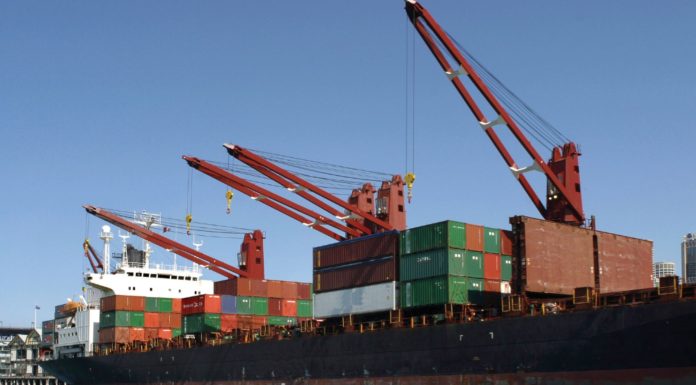
The MOU aims to collaboratively identify and define commercial and investment prospects for the potential importation of up to 5Mtpa of CO2 from Japan to the Moomba CCS project by 2030, 10Mtpa by 2035, and 20Mtpa by 2040 via Port Bonython in South Australia or Gladstone in Queensland.
This might provide a large-scale CO2 source to support Phase 2 of the Moomba CCS project as well as feedstock for future e-methane production. At the same time, South Australia and Santos would be front and centre in assisting Japan to decarbonise its economy.
Santos CEO Kevin Gallagher highlighted Moomba’s potential as a decarbonisation and low-carbon fuels hub, highlighting its potential as an exciting new industry for South Australia, in a study with JX and ENEOS.
“If we progress to the next stage, this collaboration could potentially extend the life of the Cooper Basin for another 55 years, keeping it at the centre of a modern Australian energy industry and supporting hundreds of well-paying, skilled and secure jobs for another three generations and beyond,” Gallagher said.
The first phase of the Moomba CCS project is 75% complete, with the first injection scheduled for 2024. Moomba CCS is aiming for lifecycle breakeven storage costs of around US$24 per tonne, making it one of the world’s lowest-cost CCS projects.
The project will have a capacity of 1.7 million tonnes of CO2 storage per year. That is equivalent to producing more than 25% of the total emissions reductions achieved in Australia’s electricity industry over the previous year to March 2023 every year.
“The CO2 target set for 2040 in this study is equivalent to delivering — every year — triple the total emissions reduction achieved in Australia’s electricity sector last year. It also equates to around two-thirds of Santos’ total annual Scope 3 emissions today or almost four times our current annual Scope 1 and 2 emissions — it’s huge,” Gallagher said.
“There is surging demand for carbon abatement technologies as our region strives to meet net-zero ambitions. Australia is in a prime position to drive circular economies using its vast carbon storage and renewable energy resources. This combination will make Australia not only a renewable energy superpower, but we can also be a decarbonisation and low-carbon fuels superpower,” Gallagher stated.
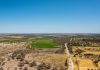
Santos’ strategic location in the Cooper Basin, with its vast land, abundant renewable energy resources, robust regulatory framework, depleted oil and gas reservoirs, and existing infrastructure, provides a significant competitive advantage.
The MOU builds on and reinforces recent MOUs with APA and ADNOC as Santos strives to construct a network of CO2 pipeline and other infrastructure in Australia to support a new CCS sector that could decarbonise not only our domestic economy, but also regional economies.