
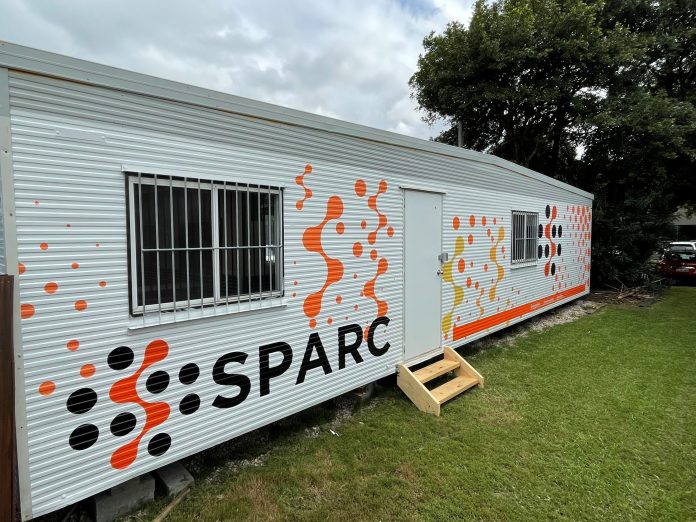
Harrison SPARC, the Harrison Group’s R&D arm, has been named as one of the recipients of the Australian Government’s Critical Minerals Development Program.
Resources Minister Madeline King announced the grant yesterday. The $50 million grant initiative aimed at accelerating the growth of Australia’s critical minerals industry, will also help the downstream value-add process specified in the Federal Government’s Critical Minerals Strategy 2022.
Harrison SPARC will develop Harrison Group chemical production using the award. The Harrison Group launched SPARC in 2021 to develop and extend its critical infrastructure capabilities. Harrison Manufacturing, a Sydney-based sibling firm, supplies 50% of the domestic market with high-performance grease, lubricants, oils, and speciality chemical additives. It sells its expertise and custom lubricant applications to worldwide mining sectors.
Harrison Group Director Julie Harrison said the $1.9 million injection would accelerate a $3.91 million research project at the company’s Brookvale, NSW headquarters and testing in Kalgoorlie, WA. It will boost lithium, cobalt, neodymium, and vanadium extraction and refinement.
According to the company, Australia supplies approximately 50% of worldwide lithium and has one of the greatest rare earth element reserves.
“We know Australia has the know-how, the ambition and the ability to become serious value-add players in the critical minerals sector. This injection of funds will help The Harrison Group on its road to helping ensure Australia is at the forefront of this push,” Harrison said.
By March 2025, Curtin University‘s WA School of Mines, Minerals, Energy, and Chemical Engineering (WASM) will finish the commercially critical project. The grant’s primary researcher, Harrison SPARC Innovation Manager Dr Tony Granville, expects the initiative to boost critical mineral production and industrial sustainability.
“We believe what we are working on will make mining for critical minerals more sustainable because it will allow greater output with the same input,” Dr Granville said.
Dr Granville described the project as a possible game changer in the extraction of critical minerals, claiming that it has the ability to supply $400 million in lithium to the Australian market yearly.
“The current rate of extraction of lithium in mining is roughly 85% per tonnage of spodumene ore. We believe our project would bump that figure up to 95%,” Dr Granville added.