
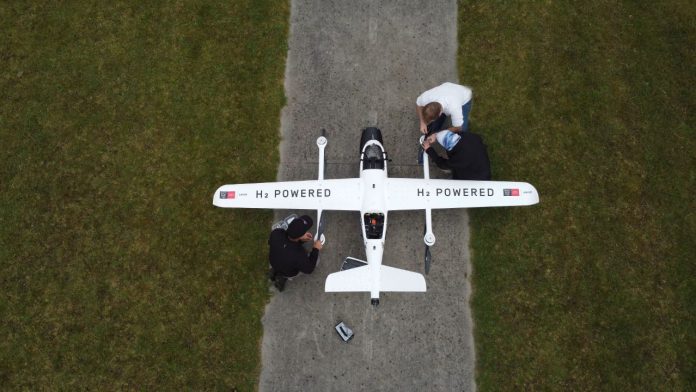
The Swinburne University of Technology’s Aerostructures Innovation Research Hub (AIR Hub) has completed the first flight of the Australian-developed hydrogen fuel cell electric-powered Innovative Small Hydrogen Aircraft Development & Evolution (SHADE) drone.
The SHADE drone was developed through AIR Hub’s Hydrogen to the Skies (H22S) project, which is funded by the Australian Government’s Emerging Aviation Technology Partnerships program. The flight test is the first electric vertical take-off and landing (eVTOL), hydrogen-powered uncrewed aerial system (UAS) flight.
“The successful hydrogen-powered flight of the SHADE drone represents a significant milestone in not only the H22S project, but also the development of net zero aerospace in Australia,” AIR Hub Director Dr Adriano Di Pietro said.
The drone is the product of collaboration among Swinburne’s Victorian Hydrogen Hub (VH2), industry partners, researchers, and businesses across the aviation and hydrogen industries.
The project aims to design and integrate a hydrogen propulsion system into a large-scale drone to lead the commercial development of clean, zero-emissions uncrewed air systems. It also demonstrates Swinburne’s commitment to producing sustainable aviation technologies.
The flight happened in Latrobe Valley in Victoria last week, showcasing a milestone in clean aviation and enabling extended range surpassing battery-powered UAS.
AIR Hub is completing research demonstrating the potential to convert existing internal combustion-powered aircraft into emission-free flight.
This hydrogen flight positions Australian aerospace and aviation companies to utilise hydrogen propulsion progressively from UAS to passenger and freight air vehicles.
Hydrogen propulsion will enable longer-range regional and remote-area flights. Projects like H22S will significantly impact Australia’s supply chain ecosystem as uncrewed, hydrogen-powered aircraft displays the potential to deliver products and even life-saving medications to the most remote environments.
“Swinburne’s AIR Hub is dedicated to cementing Australia as a key player in the global effort towards the decarbonisation of the aviation and aerospace industry, and we believe that utilising hydrogen power is key to this journey,” Dr Di Pietro added.