
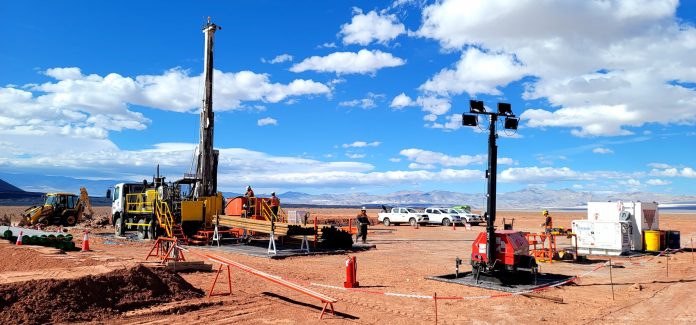
Lake Resources provided an operational update on its Kachi brine project in Argentina, where DLE technology is used to create cleaner battery-grade lithium carbonate.
Lake CEO David Dickson stated that the recently announced plans demonstrate a clear path to battery-grade lithium carbonate production starting in 2027 and a projected expansion rate of 50 ktpa by 2030.
Dickson noted that the new phased approach ensures battery-grade lithium carbonate enters the market in a cleaner, more effective manner while reducing project execution risks.
“Over the past nine months, we have applied our extensive expertise in drilling, hydrogeology, and construction of large, specialty chemical projects to comprehensively reassess this project and better position us for success. Our findings regarding infrastructure, power, logistics requirements, and our reservoirs resulted in this path to production which will unlock value and maximise execution efficiency. This approach also provides expansion optionality to 50Ktpa, and potentially more,” Dickson said.
“Our proven process flow incorporates both the “mine and refine” stages of producing battery-grade lithium carbonate, ensuring product consistency and designed to mitigate environmental impact,” Dickson added.
Independent testing of lithium carbonate generated by Argentina’s Kachi Project revealed grades and purity of more than 99.8%.
“We have validated the major commercial process systems for the Kachi Project and the ability to produce high-quality, battery-grade lithium carbonate from Lake’s brine resource using Lilac DLE technology,” Dickson said.
According to him, phased production delivers the following benefits:
- Full use of potential resource upside
- The “design one, build many” strategy leads to increased productivity as a result of lessons gained
- More adaptable power supply and less need for grid connection for plant startup
- Allows for flexibility in plant size and product type, allowing it to respond to changing market conditions
- Allows for the control of potential reservoir impacts
- Reduces peak labour demand during construction and strengthens operations
“We have consulted with our project stakeholders including our debt providers and offtake partners, and they are supportive of the phased plan,” Dickson said.
Lake plans to finish the DFS by December 2023.