

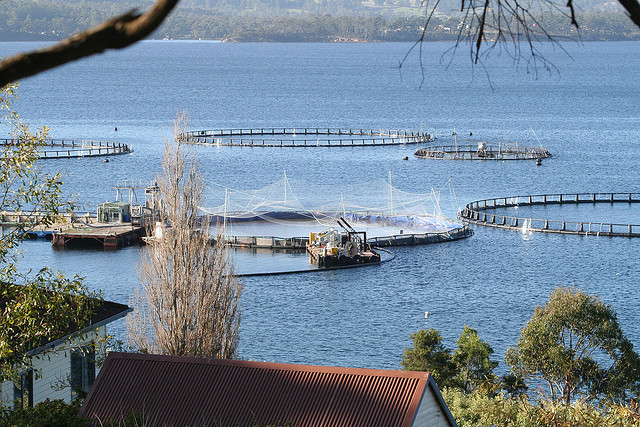
Tassal Operations Pty Ltd, Australia’s largest farmed Atlantic salmon producer, has been granted certification to the Aquaculture Stewardship Council (ASC) standard, the most rigorous environmental and social sustainability certification program for farmed seafood products.
According to the press release by Market Wired, the ASC certification means the company’s farmed salmon operations are in total compliance with the seven core principles of the ASC standard, which address biodiversity preservation in the surrounding ecosystem, water quality protection, commitment to sustainable sourcing and transparency with community stakeholders.
“Tassal’s ASC certification will not only provide market benefits for Tassal and its customers, but will also minimize impacts on the Tasmanian marine ecosystem,” said Robert J. Hrubes, SCS Executive Vice President.
“By achieving ASC certification, Tassal is demonstrating leadership in responsible salmon farming.”
Earlier this year, SCS Global Services, a globally recognized certification body, certified one of Tassal’s major salmon farming sites, Macquarie Harbour, to the ASC standard.
The company has now set its sights on getting all six of its salmon farming sites certified under the ASC standard in the coming year, as well as obtaining ASC Chain of Custody certification for its processing sites, to demonstrate that certified salmon is properly tracked and segregated from non-certified products throughout the supply chain.
“SCS is proud to be working closely with seafood farms in the Australasia region. We congratulate Tassal on their accomplishment, and look forward to working with Tassal in its pursuit of ASC certifications for all their farming sites,” said Sabine Daume, Director of SCS’ Sustainable Seafood Program, based in SCS’ Australia satellite office.
“With more and more customers demanding sustainable products, it makes sense for the environment and for the bottom line of Australian companies,” said Mark Ryan, Tassal CEO.
The company also informed that it has conducted a life cycle assessment (LCA) of its operations in order to fully understand its environmental impact profile. The results from the LCA established the baseline data used by Tassal to reduce ocean nutrient pollution by 400 tonnes, thus contributing to the health of the local ecosystem.







 standard, the most rigorous environmental and social sustainability certification program for farmed seafood products.)