
Anson Resources Limited has announced the production of its first battery-grade lithium carbonate product from brines from Paradox Lithium Project.
The lithium carbonate was produced using the flowsheet built for Anson’s lithium-rich brines at the Paradox Lithium Project by Sunresin. It allows the Company to advance with lithium carbonate off-take and supply discussions, as well as deliver samples to potential off-take Original Equipment Manufacturer (OEM) partners, such as electric vehicle and lithium-ion battery manufacturers.
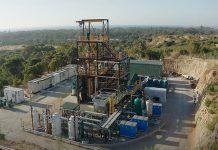
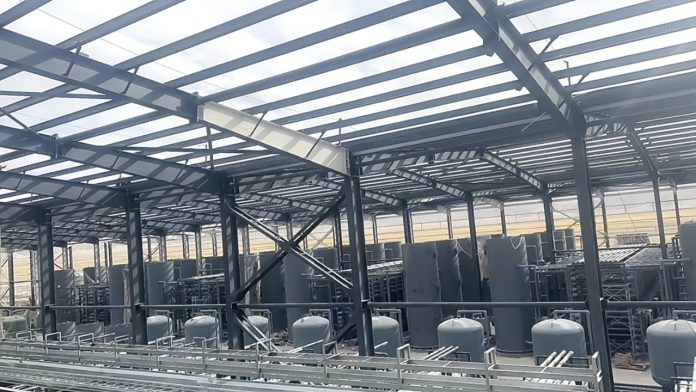
The initial lithium carbonate samples were produced at Anson’s newly established Lithium Innovation Centre (LIC) in Florida, USA, where the equipment and DLE process replicate Sunresin’s DLE process, which Anson intends to use at its proposed lithium production plant at the Paradox Lithium Project.
Anson proposes to gradually ramp up production at the demonstration facility to fulfil demand from potential off-take partners.
Anson has generated 33 gallons of eluate from 99 gallons of raw brine collected from the Long Canyon Unit 2 well at the Paradox Lithium Project during the exploration program in 2022 since the start-up of processing over last month. Production is expected to increase during the following month.
The sample demonstration plant will then be relocated to the projected production site at the Paradox Project, where brine will be extracted straight from extraction wells. This would allow the demonstration plant to operate continuously and boost production to meet the expected demand for larger sample sizes from possible off-take partners for evaluation purposes.
The DLE is the initial phase in the LCE production process, and Anson has successfully tested it at an independent laboratory in Salt Lake City. The test work was carried out on a small-scale DLE pilot plant, which included both the adsorption and desorption processes.
The test work program investigated the capacity of Sunresin’s resin used in the DLE process to preferentially adsorb lithium over other elements in the supersaturated brine, such as magnesium, potassium, and sodium.
After the adsorption process was completed, this was accomplished by assaying numerous samples of the discharged, spent brine for the various components contained in the brine. Except for a significant fall in the lithium concentration, all adsorption tests consistently revealed that the element concentrations stayed around the feed brine concentrations during each cycle, demonstrating that the lithium had been maintained.
According to Anson, each lithium “loaded” resin column underwent desorption tests following the adsorption testing. The resin columns were allowed to drain any leftover input brine before the desorption cycle.
After draining the columns, purified water (DI water) was utilised as the elution fluid to flush the resin; elution is the process of removing a material that has been adsorbed to another by washing it with a solvent. The lithium concentration in the collected samples was analysed to determine the desorption properties of the loaded resin.
The DI water desorption process revealed the ability to easily release the lithium from the loaded resin. The findings of the desorption test were consistent with prior desorption testing performed on brine from other wells; in previous test work, the concentration of lithium in the eluate was substantially higher.