
Last week, an Australian team of agricultural leaders visited Timor-Leste to learn about the country’s agricultural development goals and to investigate research collaboration prospects.
The Commission for International Agricultural Research features seven outstanding academics that advise Australia’s Minister for Foreign Affairs on agricultural development concerns.
The visit was part of the Commission’s week-long agenda, which focused on present and upcoming food security and sustainable development challenges in the Indo-Pacific region.
According to the Australian Centre for International Agricultural Research (ACIAR), Timor-Leste’s agrifood systems are under growing pressure from a variety of causes, such as seasonal food shortages, difficulties obtaining inputs, low productivity, pests and illnesses, and difficult access to markets for farming communities.
Smallholder farmers in Timor-Leste are essential to the nation’s food and nutrition security because most citizens reside in rural regions. The Government of Timor-Leste’s primary goals include raising agricultural production, the financial benefits from farming, raising livestock, and fishing, and improving the general operation of food systems.
Chair of the Commission and National Farmers’ Federation President Fiona Simson said the trip was very helpful in understanding farmers’ difficulties and determining how potential future investments can benefit one of Australia’s closest regional neighbours.
“Timor-Leste is facing significant challenges in its agrifood systems and its broader sustainable development. Infertile soils, highly variable weather conditions, biosecurity threats causing harvest losses, labour constraints and poor market access are all impacting the livelihoods and wellbeing of rural communities,” Simson stated.
Simson added that smallholder farmers lack access to trustworthy, locally relevant, and practical science-based guidance to assist them in managing these problems. She noted that this significant limitation affects many aspects of local food systems.
“Many of the challenges that farmers face in Timor-Leste are similar to the challenges facing Australian farmers back home. The size and scale may be different, but the reoccurring themes of sustainable intensification to improve livelihoods of rural communities are consistent,” Simson said.
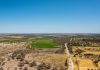
The Commission visited the Ministry of Agriculture and Fisheries, held partnership discussions with local researchers, examined ACIAR-funded livestock and cropping areas, and toured WorldFish facilities in Timor-Leste.
‘It’s been rewarding to visit ACIAR-funded research sites to meet with farmers and see first-hand how research partnerships, underpinned by Australian agricultural knowledge, are empowering rural communities to increase production, enhance food and nutrition security, and boost livelihoods in ways that are sustainable,’ Simson stated.
The Seeds of Life program has been a significant ACIAR investment in Timor-Leste. The research began in 2000 and lasted 16 years and was critical in improving Timor-Leste’s scientific infrastructure by creating research stations and seed-cleaning systems. It also contributed significantly to developing the country’s national seed system, allowing more than 65,000 farming households access to 19 enhanced types of high-yielding certified seeds for food crops.
ACIAR CEO Professor Andrew Campbell said ACIAR-funded programs such as Seeds of Life have helped Timor-Leste create a firm basis for developing its agricultural industry.
“’Timor-Leste is an important strategic partner for Australia in the Indo-Pacific region. ACIAR has been working in Timor-Leste for more than 20 years, with many enduring partnerships at the national and institutional levels,” Professor Campbell said.
Professor Campbell stated that Australian-led agricultural research programs have considerably aided the growth of Timor-Leste’s agricultural sector, contributing significantly to poverty reduction, food and nutrition security, and human health improvement.
‘It’s invaluable to have the Commission in Timor-Leste to see first-hand how ACIAR investment can improve sustainable agricultural systems and to explore how Australia can deepen and further that effort,’ Professor Campbell added.
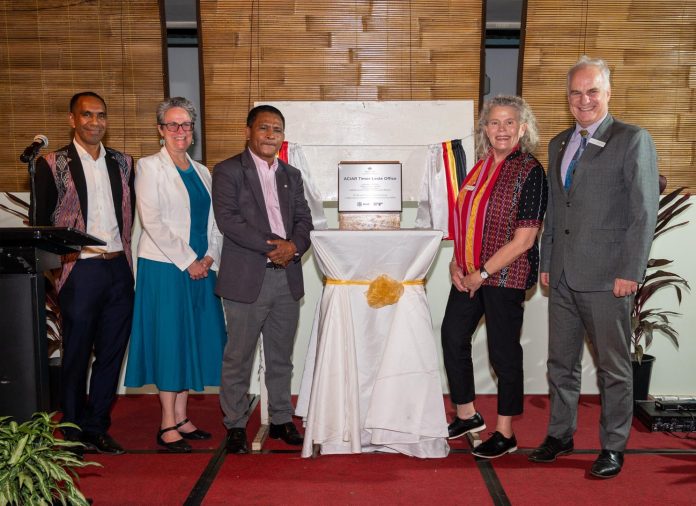
The Commission assisted in the official opening of the ACIAR Office in Dili, which was formed in 2022 to support greater engagement with key research partners and to advance Timor-Leste’s agricultural research partnership with Australia.