

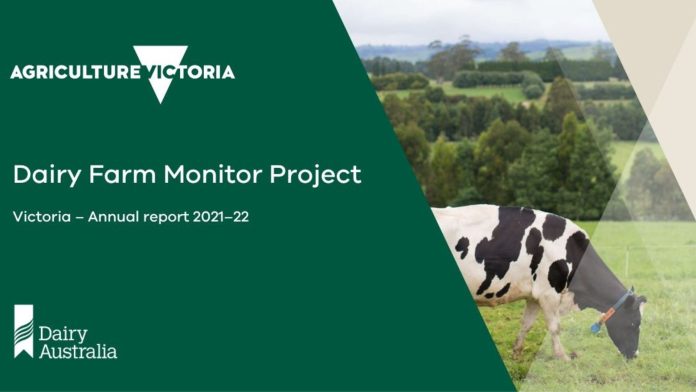
The 2021-22 Victorian Dairy Farm Monitor Project (DFMP) findings show Victorian participants had the fourth-best financial returns on average across the 16 years of the project.
A cooperative project of Agriculture Victoria and Dairy Australia, Dairy Farm Monitor collects financial and physical information from participant farms in Gippsland, the South-West, and Northern Victoria.
Agriculture Victoria Farm Business Economist Natalie Nelson said the 80 participating farm enterprises had an average profit of $384,000 in 2021–2022, or $1.72 per kilogram of milk solids, which was 45 per cent higher than the long-term average.
“This strong performance was influenced by a nine per cent increase in average milk price to $7.37 per kilogram of milk solids,” Nelson stated.
However, Nelson added that the total 2021–22 farm business margins were influenced by the increased milk price and more significant input costs and supply limitations, including labour, feed, and fertiliser.
“For dairy farms in the irrigation areas of the Goulburn Murray and Macalister Irrigation District, favourable seasonal conditions and lower irrigation costs assisted in strong performances,” Nelson said,
According to Dairy Australia Lead Farm Business Data Helen Quinn, the findings were especially promising, with farmers expressing confidence in agricultural business returns over the next 12 months.
“The Dairy Farm Monitor Project is a valuable source of information to the industry, with the annual reports providing comprehensive physical and financial analysis for government and industry decision-makers on the farm-level factors that contribute to profit,” Quinn stated.
Quinn added that 250 farms are participating across Australia, with Victoria having the largest cohort.
Nelson claimed that companies could efficiently analyse and evaluate their operational success over time thanks to the financial and production data gathered in the report.
“This year many participants reported they had used the favourable milk and livestock prices and cashflows to expand and improve their business, by purchasing land, investing in infrastructure and machinery, resulting in higher business equity,” she said.






 findings show Victorian participants had the fourth-best financial returns on average across the 16 years of the project.)