
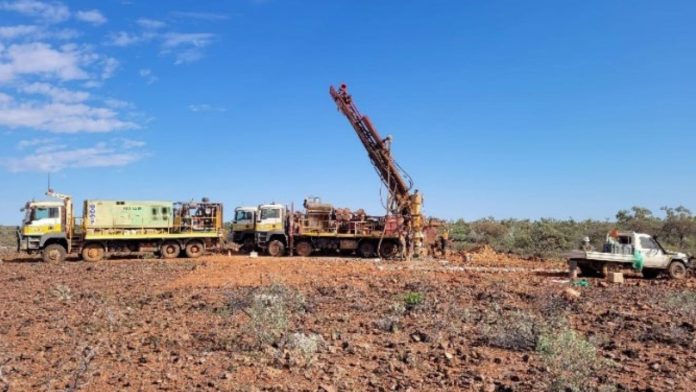
Dreadnought Resources Limited has announced that assay results from the remaining 66 holes drilled at the Mangaroon Project in Western Australia (WA) continue highlighting large-scale mineralisation at the C1-C5 carbonatites.
The project contains high-grade, multi-metal potential for Neodymium, Praseodymium, Phosphorus, Niobium, Titanium and Scandium.
According to Dreadnought, the mineralisation at the Yin Rare Earth Elements (REE) Ironstone Complex contains significantly higher Neodymium and Praseodymium as a fraction of the rare earth oxides than most other REE deposits across the world, over 50 per cent higher than the global average.
It added that broad zones of flat to shallow dipping mineralisation with parallel lodes and a resource intensity of 4.8 Mt/km make for a potentially attractive mining proposition.
The company is currently focused on upstream options, including mining, milling and concentrating, but added that opportunities for mid and downstream industry participants would be assessed as they arise.
Dreadnought also reported positive metallurgy results, saying initial metallurgical test work from Yin achieved a recovery of 92.8 per cent at a concentrate grade of 12.3 per cent Neodymium oxide and an average of 40 per cent Total Rare Earth Oxide (TREO)
It added that metallurgical studies for 16 diamond holes drilled at Yin are underway, with results expected to be released by April or May.
According to Dreadnought Managing Director Dean Tuck, despite only completing a third of the planned first-pass drilling, the large scale of the critical metal opportunity at Mangaroon is already apparent.
“We are excited to have two reverse circulation rigs on site and to be re-commencing our unfinished first pass drilling of the C1-C6 carbonatites, the high-grade niobium intercepts may also be a sign of things to come as well infill the wide-spaced drilling” he added.
Tuck added that the infill resource drilling at C3 is also showing significant promise.