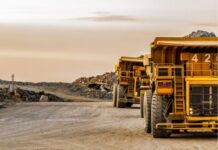

A new report from the Clean Energy Finance Corporation (CEFC) and the Minerals Research Institute of Western Australia (MRIWA) demonstrates how Australian miners can benefit from the clean energy transition while accelerating national decarbonisation efforts. It claims that technological advancements have made low-emissions mining commercially viable.
While the mining industry faced difficulties in reducing emissions, The compelling case for decarbonisation: Mining a low emissions economy report states the sector could profit from the once-in-a-generation demand shift to minerals like lithium, graphite, cobalt, and nickel needed to power urgent global efforts to decarbonise.
In a statement, the CEFC said the report discovered a robust commercial case for decarbonisation and identified significant improvements in low-emissions technologies that would allow the sector to reap the economic benefits of more sustainable mining. Significant investment, innovative market development, and expedited emissions targets were all required if Australian miners were to lead the industry, the CEFC added.
CEFC Resources Executive Director Rob Wilson stated that mining had been a cornerstone of the Australian economy, delivering the needed minerals for global growth and prosperity.
“Australia has a comparatively large share of critical minerals needed to power the low emissions economies of the future. By helping meet surging demand for these resources, the mining sector can help Australia and the world achieve net zero emissions by 2050, while continuing to create jobs and opportunities around the country,” Wilson said.
According to the CEFC, Australia ranks among the world’s top producers of essential mineral commodities, many of which are critical to the clean energy transition. The corporation reported that the nation’s resource and energy export revenues are expected to be $405 billion in 2021-22, rising to $419 billion in 2022-23.
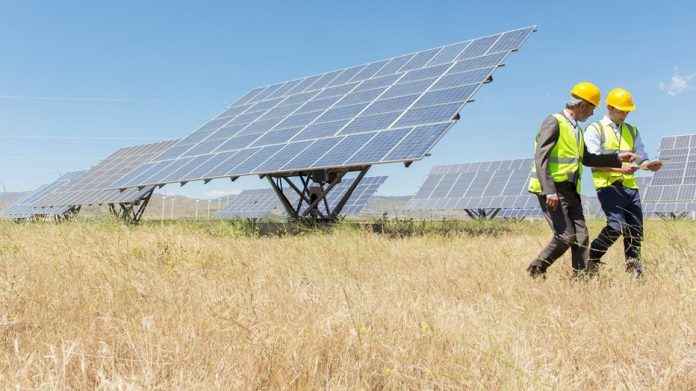
The report also provides guidelines to help miners map out a road to net zero emissions, including instructions on developing and carrying out decarbonisation plans, measuring baseline energy and emissions, and analysing which renewable technologies are most suited for various mines. It outlines low-risk short-term technology investment choices, such as installing on-site renewable energy sources, as well as medium-term options, like electrifying the mining fleet, with green hydrogen-based technologies presenting additional potential for decarbonisation.
The report also contains modelling by ENGIE Impact for a hypothetical mine that shows four net zero pathway options for typical mining and processing operations. Three of these four demonstrated economic routes to net zero, with the “electrification” route yielding a 20 per cent rate of return.
MRIW CEO Nicole Roocke described the task as large but not impossible.
“By sharing information on what is already being achieved, and examining the current and emerging technologies required from mining to mineral processing, we can build a common understanding of the outstanding issues and start working together to create a momentum to find the necessary solutions,” Roocke said.
Wilson concluded that the energy transition presents a fantastic opportunity for proactive mining companies to establish a competitive advantage.
“By decarbonising their operations, Australian mining producers can align financial profitability with sustainability to position themselves as market leaders,” he added.