
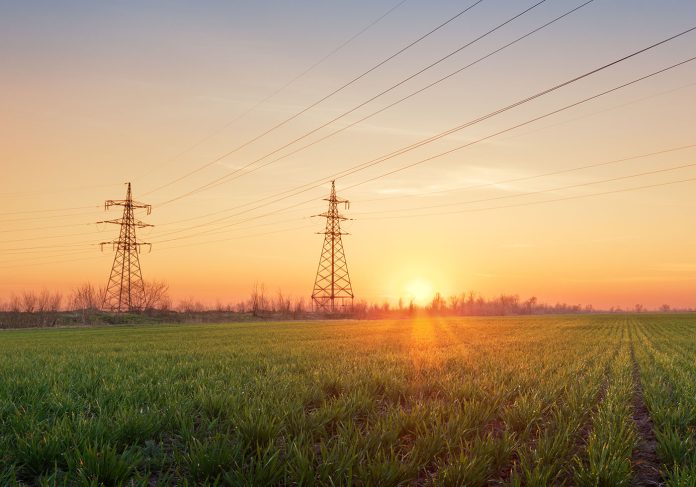
A new report suggests that investing in promoting clean energy in business clusters can save taxpayers money, reduce transmission requirements, and accelerate emissions reduction.
The Safeguard Mechanism‘s 215 sites are considering ways to reduce emissions, with economic modelling by Acil Allen and the independent think tank Beyond Zero Emissions revealing that building shared transmission lines and green hydrogen pipelines could save money and create jobs. This comes just before the European Union‘s Carbon Border Adjustment Mechanism begins, which will apply tariffs to imports from countries lagging in emissions reduction, focusing Australian businesses on emissions reduction.
The report found that:
- Replacing five 100 MW transmission lines with one 500 MW line can save nearly three-quarters ($798 Million AUD) for 100 km distances and two-thirds ($1.996 Million AUD) for 250 km distances.
- Replacing five 50TJ/day capacity green hydrogen pipelines with one 250TJ/day capacity pipeline can reduce capital costs by 48-62% over 100-250 km distances.
In Gladstone, the savings can reach $610 million for 100 kilometres of pipeline or $1.2 billion for 250 kilometres.
According to Beyond Zero Emissions, building shared energy infrastructure in Gladstone, Central Queensland, could generate 200 new jobs annually, generate $2.4 billion in real economic output by 2050, and generate $600 million in government revenue by 2050, potentially investing in local hospitals and schools.
Meanwhile, Kwinana can save $1.2 billion for 100 kilometres of pipeline and $2.25 billion for 250 kilometres.
The think tank noted that Kwinana could generate an additional 460 jobs annually, $5 billion in real economic output by 2050, and $850 million in government revenue, which could be invested in local schools and hospitals.
Beyond Zero Emissions CEO Heidi Lee said the think tank advocates for government investment in 14 industry hubs surrounding high-emitting industrial regions as an efficient taxpayer money investment.
“Coordinated investment into shared infrastructure can incentivise industry to coordinate their energy demand and emission reduction plans efficiently. Government investment in shared energy infrastructure empowers businesses to reduce their own emissions,” Lee stated.
According to her, industry in just four proposed renewable energy hubs — Gladstone, Kwinana, Hunter, and Bell Bay — accounts for over a quarter of the emissions covered by the Safeguard Mechanism.
“The modelling showed that by funding clusters of facilities in Gladstone and Kwinana alone could deliver an additional 50 Mt reduction in emissions,” she added.
“Government can coordinate investment into transmission, green hydrogen pipelines and other shared infrastructure in these regions, which will help high emitting facilities switch to clean energy supply sooner. Hundreds of regional jobs, billions in economic output and hundreds of millions in government revenue can be created,” she continued.
The report recommends:
- Key funding programs like the Safeguard Transformation Scheme, Rewiring the Nation, and National Reconstruction Fund prioritise facilities coordinating energy demand, focusing on backbone infrastructure serving multiple facilities.
- Accelerate investment in renewable energy infrastructure in existing industrial regions to promote regional decarbonisation.
- Establishing a national clean industry hub program will coordinate infrastructure planning, approvals, and investment to ensure government funding provides optimal value, accelerates decarbonisation, and boosts investor confidence.