
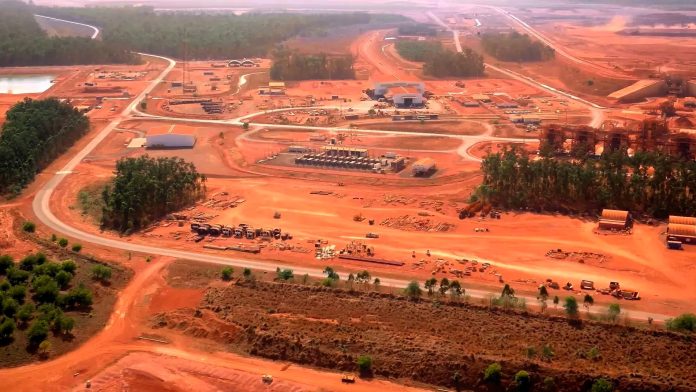
Rio Tinto has approved a 12.4MW solar farm and 8.8MVa/2.1MWh battery storage for its Amrun bauxite operations in Queensland, as part of its global decarbonisation strategy and efforts to reduce emissions at its operations.
The new solar farm and battery storage are projected to lower Amrun’s diesel electricity use by 37% and annual CO2-equivalent emissions by 14,000 tonnes. They will complement the existing 5.6MW of solar and 4MWh of battery power constructed for Rio Tinto’s Weipa operations and the local electricity network since 2015.
Aggreko has been tasked with building, owning, and operating the solar farm to provide renewable electricity to the mine operations in addition to its current contract.
“The construction of the Amrun solar farm and battery storage system, which is located on Wik and Wik-Waya Traditional lands, is an important milestone for Weipa Operations and will contribute to Rio Tinto’s commitment to reduce operational greenhouse gas emissions,” Rio Tinto Weipa Operations General Manager Shona Markham said.
Markham stated that the Amrun solar farm would be one of three Weipa Operations solar stations and would provide 18MW of solar generation capacity to Weipa mines and towns, aiming to reduce greenhouse gas emissions from their operations.
“This partnership aligns with our mission to accelerate the energy transition and as a world leader in the supply of clean energy infrastructure, we are confident that we will successfully deliver reliable and efficient energy for Rio Tinto’s Amrun operations,” Aggreko Asia Pacific Managing Director George Whyte said.
Construction has commenced on the new solar farm, and is projected to be operational by early 2025. Once completed, the Amrun solar farm will generate around 21 gigawatts of renewable energy annually.
Weipa Operations’ solar farms, when combined with its existing renewable power generation network, are expected to decrease diesel consumption by 10 million litres annually and annual greenhouse gas emissions by 28,000 tonnes, equivalent to removing over 6,000 passenger cars.