

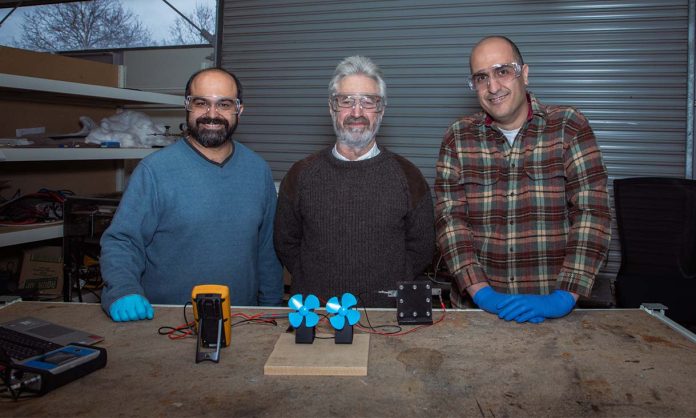
RMIT University engineers have developed the proton battery technology that could power homes, vehicles, and devices without the difficulties associated with lithium-ion batteries.
The battery uses a carbon electrode to store hydrogen separated from water and subsequently operates as a hydrogen fuel cell to generate energy.
The RMIT team is embarking on a two-year research partnership with Eldor Corporation, an Italian-based international automotive component supplier, to develop and prototype this technology. RMIT and Eldor have worked on the same technology for the past five years.
Lead researcher RMIT Professor John Andrews stated that recent design enhancements to the proton battery made it competitive as a carbon-neutral alternative to lithium-ion batteries.
“As the world shifts to intermittent renewable energy to achieve net-zero greenhouse emissions, additional storage options that are efficient, cheap, safe and have secure supply chains will be in high demand,” Professor Andrews said.
“That’s where this proton battery – which is a very equitable and safe technology – could have real value and why we are keen to continue developing it into a viable commercial alternative,” he added.
He noted that a proton battery has no end-of-life environmental challenges since all its components and materials can be rejuvenated.
The team exhibited a functional proton battery that can power multiple small fans and light for several minutes.
Professor Andrews stated that their newest battery’s storage capacity of 2.2 wt% hydrogen in its carbon electrode was over three times that of their 2018 prototype and more than double that of previous known electrochemical hydrogen storage systems.
“Our battery has an energy-per-unit mass already comparable with commercially-available lithium-ion batteries, while being much safer and better for the planet in terms of taking less resources out of the ground,” the Professor said.
According to him, RMIT’s proton battery employs abundant, cheap carbon as its principal material, allowing for fast charging and minimising the need for expensive rechargeable batteries such as lithium, cobalt, and vanadium.
During charging, the proton battery splits water molecules to produce protons, which bind to a carbon electrode.
Professor Andrews said the proton battery saves energy by storing hydrogen gas at high pressure and then splitting the gas molecules again in fuel cells.
“When discharging, protons are released again from the carbon electrode and pass through a membrane to combine with oxygen from the air to form water – this is the reaction that generates power,” he explained.
He noted that RMIT’s proton battery has substantially lower losses than typical hydrogen systems, making it directly equivalent in energy efficiency to lithium-ion batteries.
“We are looking forward to developing this technology further in Melbourne and Italy, in partnership with Eldor Corporation, to produce a prototype battery with a storage capacity that meets the needs of a range of domestic and commercial applications,” he said.
“The aim of this collaboration is to scale up the system from the watt to the kilowatt and ultimately to the megawatt scale,” he added.
The RMIT team acknowledges funding from the Australian Renewable Energy Agency (ARENA) and the Victorian Government through a VESKI Study Melbourne Research Partnerships grant that supported their previous work on the proton battery.
RMIT has internationally patented the technology.