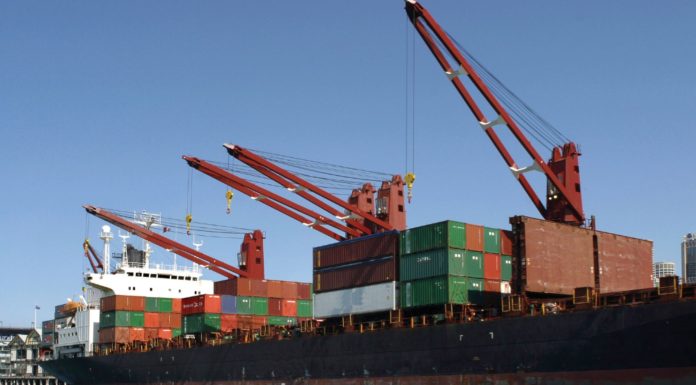

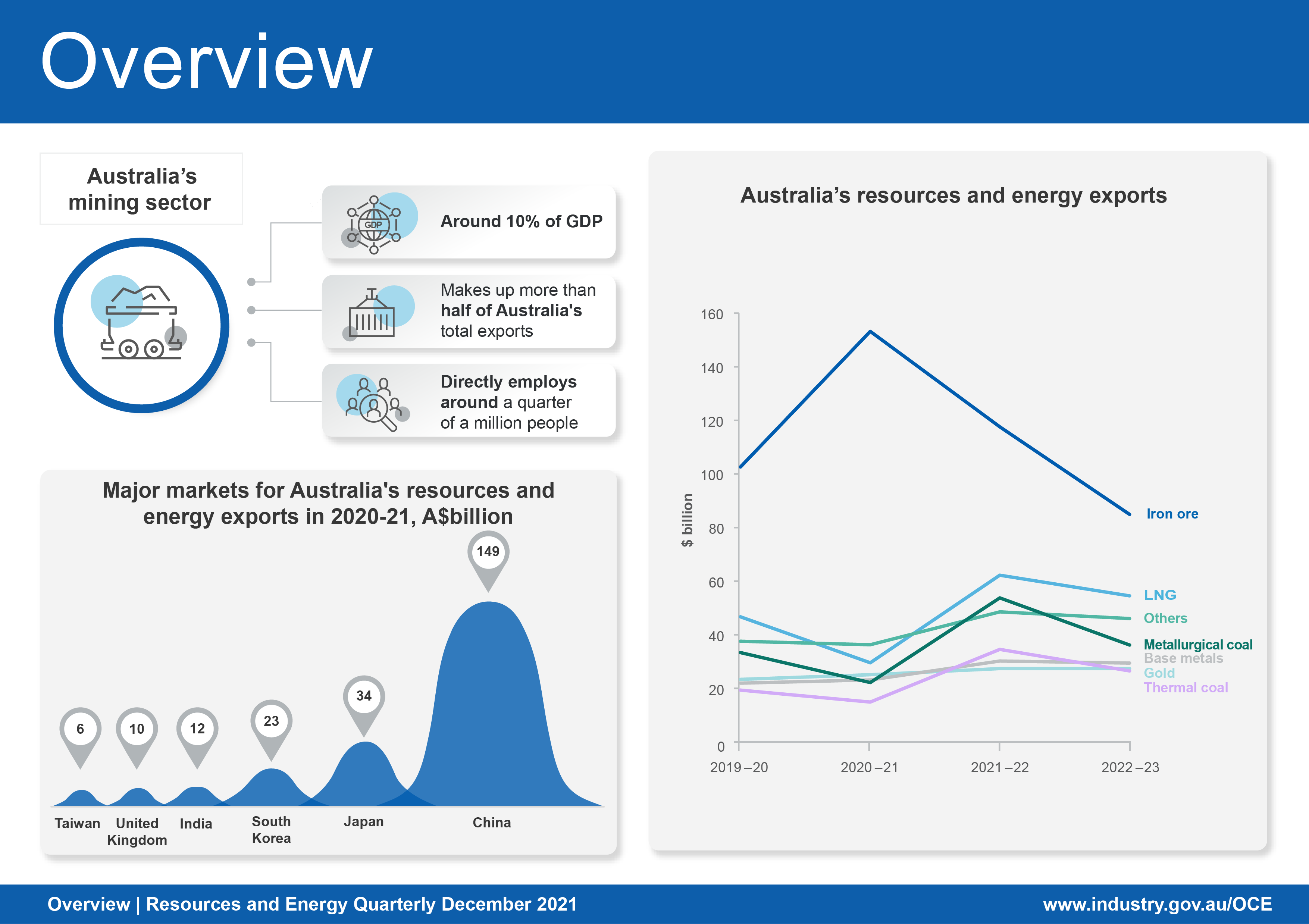
The mining and energy sector’s position as a vital driver of jobs and economic growth has been reinforced by the latest export predictions, which put the industry on course to set a new high.
As demand for Australian coal and gas rises in the face of a worldwide energy shortage, resource and energy export revenues are expected to reach a remarkable $379 billion in 2021–22.
High commodity prices, solid volume growth, and a weak Australian dollar are driving a spike in export earnings, according to the December issue of the Resources and Energy Quarterly (REQ) from the Department of Industry, Science, Energy and Resources.
Exports of thermal coal are predicted to increase from $16 billion in 2020–21 to $35 billion in 2021–22. In 2022–23, earnings are expected to drop to $27 billion.
Exports of metallurgical coal are predicted to increase from $23 billion in 2020–21 to above $50 billion in 2021–22.
However, iron ore export revenues are predicted to drop from a high of $153 billion in 2020–21 to $118 billion in 2021–22, then to $85 billion in 2022–23.
Higher prices, adoption of new energy technologies, and increasing production are likely to boost lithium, nickel, and copper export revenues during the next two years.
As oil-linked contract prices fall, Australia’s LNG export revenues are expected to climb from $30 billion in 2020–21 to $63 billion in 2021–22, before settling back to $55 billion in 2022–23.
Keith Pitt, the Minister for Resources and Water, stated that the resources industry has once again proven to be the core of the Australian economy, and that it would continue to support the country’s future growth.
“In 2020–21 our resources and energy earnings passed $300 billion for the first time, reaching $310 billion, and are now forecast to top that by $69 billion in 2021–22.
“These are outstanding results that will provide further jobs and opportunities in our regions and benefit all Australians.
“Hundreds of new projects in the pipeline, including 60 new or expanded coal mines, will deliver thousands of new jobs, especially in regional areas.
The most recent Resources and Energy Quarterly can be found on the website of the Department of Industry, Science, Energy, and Resources.