
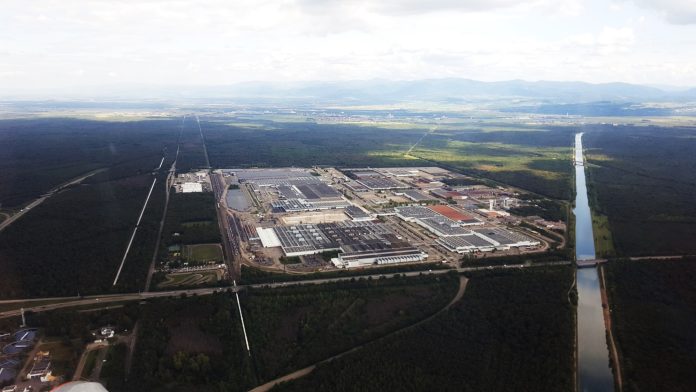
Stellantis N.V. and Vulcan Energy Resources Limited have executed a binding term sheet for the first phase of a multiphase project to develop new geothermal projects to decarbonise the energy mix at Stellantis’ Mulhouse Plant in France, which produces the DS 7, Peugeot 308 and 308 SW, 508 and 508 SW, and the new 408 models.
According to Vulcan, the projected renewable energy project may supply a considerable fraction of the industrial site’s yearly energy demands starting in 2026, based on current expectations.
Vulcan will conduct a Pre-Feasibility Study (PFS) for Stellantis’ geothermal renewable energy assets in the southernmost part of its focus area in the Upper Rhine Valley. The study will also evaluate lithium production potentmial. If successful, advanced studies and development will follow. Stellantis will seek 50% project development funding, and the parties will seek public funding. Stellantis and Vulcan hope to develop the project 50:50 after a successful PFS.
Stellantis and Vulcan will collaborate to generate clean, renewable energy for Stellantis’ manufacturing facility.
In November 2022, Vulcan announced several efforts to extend its geothermal renewable energy and Zero Carbon Lithium™ business into France, notably Alsace, which makes up one-third of the Upper Rhine Graben. Vulcan requested an exclusive lithium and geothermal license over Mulhouse to acquire an additional 480 km2 of development territory in the Upper Rhine Graben Valley Brine Field. Vulcan will conduct a JORC Code lithium mineral resource evaluation, per the term sheet.
The “French Mineral Resources Observatory” will analyse French critical raw materials resources and make public investment recommendations supported by the recently announced 2 billion euro “French Critical Raw Materials Fund.” Vulcan’s Zero Carbon Lithium™ project is aligned with this initiative.
“We are proud to announce another step in our partnership with Vulcan, which demonstrates our commitment to increase the use of decarbonized energy solutions across our facilities. Geothermal is one of many solutions we explore to achieve our sustainability goals in alignment with our Dare Forward 2030 strategic plan,” Stellantis Chief Manufacturing Officer Arnaud Deboeuf said.
Stellantis is on target to become a carbon net zero company by 2038, with single-digit emission compensation. Stellantis’ second possible usage of sustainable geothermal energy to decarbonise and localise its industrial energy supply is with Vulcan Energy.
“Vulcan’s core mission is decarbonisation, through renewable energy and carbon neutral lithium supply. Vulcan is here to support Stellantis, our largest lithium customer and one of our major shareholders, to decarbonise its operations in Europe. While we remain focused on execution of our integrated Phase One commercial lithium and renewable energy project, in the centre of the Upper Rhine Valley Brine Field, this project is a complementary opportunity to expand our future development pipeline into the French region of the Upper Rhine Valley, supported by industrial partners like Stellantis,” Vulcan Managing Director and CEO Dr Francis Wedin stated.
“Stellantis is a major industrial player in the automotive sector in the Grand Est. This is why the Region wanted to support the group in its transition to electric. With this strategic partnership, transformation to create the industry of the future and the fight against global warming are taking shape in our Region thanks to a rational exploitation of geothermal energy,” said Franck Leroy, President of the Grand Est Region.
Vulcan’s Zero Carbon Lithium™ Project and Stellantis agreement decarbonise the European electric vehicle sector and create shareholder value.